


Classicism as political tool in contemporary America
Essay by Jol Abels
The forms and shapes of ancient Roman and Greek times, still shape the world we live in today. Their geometrical and ornamental approach to landscape, art, and architecture have had multiple revivals during history, of which many reflected a political nature. Recently, also the president of the United States Donald Trump demanded ‘making federal architecture beautiful again’ by exclusively using classical architecture in federal architecture. This paper explores whether contemporary American classicism is used as a political tool, or primarily as an aesthetic policy.
Descriptive
Classicism originated in ancient Greece and Rome, around 5th century B.C. It entails all aesthetics expression in art, landscape, and architecture and is known for its simplicity in geometrical forms, harmonious proportions, and structural ornaments (Rogers, 2001). Different from earlier peoples, the ancient Greek sought an understanding of the world around them through deduction (abstract rational logic). This resulted in them not believing in inherent divinity in nature, but sought divinity at work in nature (Rogers, 2001). Philosopher Pythagoras’ discovery on the relationship between space and musical ratios gave rise to the belief that by understanding geometrical value and mathematics, one can understand what is happening in the cosmos. And this is crucial, because by understanding what is happening in the cosmos, one can understand what is happening on earth (Bartels, 2026). Ratio, proportion and harmony were therefore explored in the surroundings, and in the human body.
The Greek philosopher Plato expands on this spatially. His creation story of Timaeus tells the story of a cosmos as a rational and harmonious whole, designed by a divine craftsman Demiurge (Rogers, 2001). His pupil Aristotle plays a big role in further defining an ideology that has impacted our idea of space until the 16th century. Unlike Plato, he believes that space is finite. Aristotle’s empirical ideas of finite space result in enclosed cities that have mostly influenced Roman city building. The cities could easily be replicated and are connected within a network of cities to Rome, making it a tool for imperialism and authority (Rogers, 2001).
In the book De Architectura, Roman architect Vitruvius summarizes Roman architecture in three requirements. Buildings should have Firmitas (firmness), Utilitas (commodity) and Venustas (delight) (Vitruvius, n.d.).
Analytical part
And it is this ideology that reaches Northern America in the 18th century. Through British colonization of The United States classicist frameworks enter the public (Ricci, 2021). Especially, founding fathers Thomas Jefferson and George Washington are impressed by the style.
Jefferson, who expressed himself both as a politician as well as an architect himself, was very vocal about his love for classicist architecture. He pleaded for an establishment of American architectural identity rooted in the neoclassical architecture of Europe. And by doing so, seeking in America an ancestor of Rome (Wilson, 2011). This is also reflected in the declaration of Independence of America, which is heavily influenced on Roman and Greek principles. Jefferson is responsible for the style of the iconic Virginia State Capitol (1785), modelling it after the Maison Carrée in France, a roman temple dating from 16 BC (Wilson, 2011).
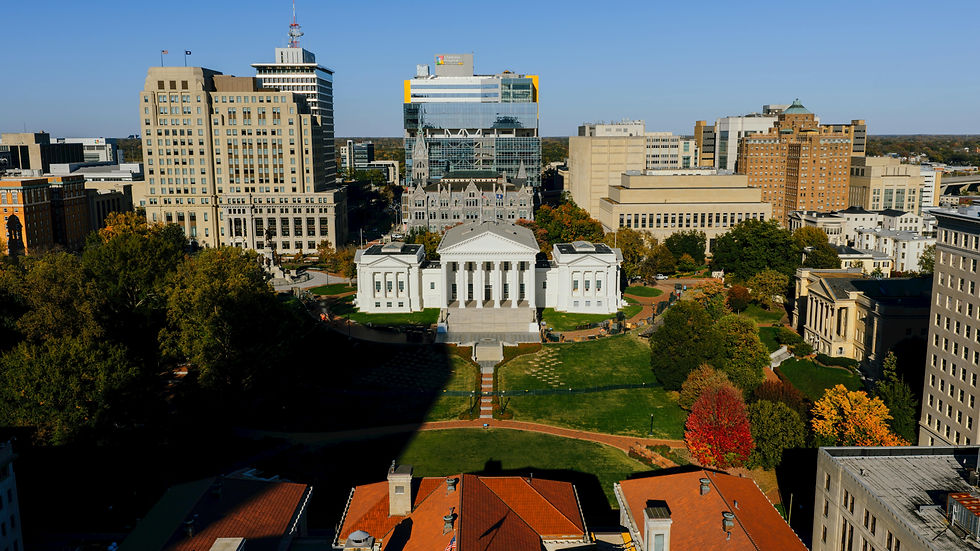
Figure 1 Virginia State Capitol designed by Thomas Jefferson (Kelly, Pexels)
And now that Trump has been officially inaugurated for his second term as president of The United States, he has sent out an executive order referring to exactly this influence of Jefferson and Washington. According to Trump, the classical buildings ‘reminded citizens not only of their rights but also of their responsibilities in maintaining and perpetuating its institutions’, which is not accomplished by modern buildings. As of August 28th 2025, the president has started the movement ‘making federal architecture beautiful again’. In it, he demands for classicistic architecture as the main style for all federal buildings across The States (J Trump & Schuster, 2025).
Noticeable is the dislike Trump has of modernist and brutalist architecture. In the opinion of Trump, the buildings built from the 1960s onwards, are unpopular by the civilians, and undistinguishable as federal buildings. He states that the General Services Administration (GSA), who oversaw the development of these buildings now call them ‘unappealing.’ In the executive order, he therefore makes an intentional point of being notified when a federal building that diverges from its preferred classist style, including Brutalist or Deconstructivist architecture or any design derived from or related to these types of architecture is being built. As opposed to classical buildings, Trump believes that modernist architecture cannot reflect the dignity, enterprise, vigour and stability of the American government. He therefore proposes new federal buildings to be built (and existing building that need to be renovated), only by architects with demonstrable experience with classicist architecture.
All of this is according to Trump to both serve the public pleasure by building recognizable and beautiful buildings, as well as reminding workers in the building of their privileges. Trump: “Buildings should uplift and beautify public spaces, inspire the human spirit, ennoble The United States, and command respect from the general public.” (J Trump & Schuster, 2025).
Interpretative part
The use of classical aesthetics by political leaders is not new. During the Renaissance - 1000 years after the fall of the Roman empire - ancient art, architecture and philosophies are revived after the stagnation during the Middle Ages (Sentil, 2024). The fall of the empire of Constantinople played a big role in bringing scholars and manuscript into Italy, invoking interest in the forgotten ancient knowledge. With the period’s emphasis on science and humanism, ancient knowledge quickly became a tool for radiating status and power. The ancient architectural ideals laid out by the Roman architect Vitruvius were interpreted as ways to justify right to power (McEwen, 2023). Buildings were commissioned in the ancient Roman styles by for example totalitarian leaders De Medici and Louis XIV to showcase status and influence and were visual statements of authority and prosperity.
In the 20th century, we see another revival of the classical architecture in political regimes of Nazi-Germany and fascist Italy. Nazi’s saw modernity as a thread to racial purity and traditions, and Hitler therefore admired Roman and Greek ideals. Hitler: “Roman history […] remains the best mentor, not only for today, but probably for all time.” Neo-classicist squares such as the Nuremberg rally grounds were places for gigantic celebrations of nazi unity and power (Hagen & Ostergren, 2006).
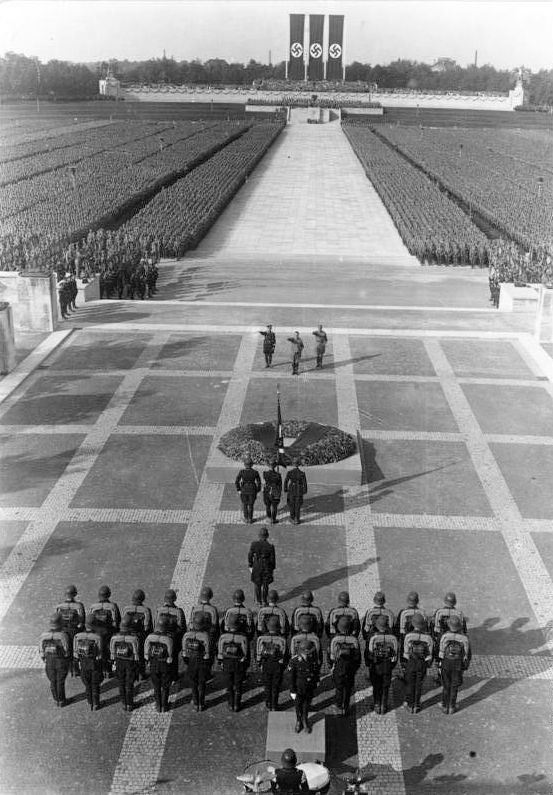
Figure 2 Party Day of the NDSAP in Nuremburg Rally Grounds (German Federal Archives)
Just like Trump’s dislike of brutalist and deconstructivist architecture, modernist art and architecture were also impermissible in Nazi Germany. Hitler even said in the climax of his antisemitic regime that “Modern art was an act of aesthetic violence by the Jews against the German spirit” (Grosshans, 1983). Modernism, with its “suggestion of hidden obscenity,” did not have a place in a regime that strived for the purity of the Aryan race, and many modernist artists fled to neighbouring European countries during Hitler’s reign.
Even if Trump claims that the shift towards classicism is just rooted in beautifying public space, critics compare the executive order with the totalitarian regimes of the past. They claim that the continuation of ancient ideologies is a way to pursue white supremacy that started with the colonisation of The United States (Block, 2020).
Judgment part
To reflect on this, we should look at different perspectives. First, the notion of public preference. Trump added a survey on the preference for architectural styles of Americans to his executive order. These convincingly show the preference for classicism over modernism (Americans’ Preferred Architecture For Federal Buildings — National Civic Art Society, z.d.). This is supported by other research, each proving classical architecture to be preferred.

Figure 3 Americans’ Preferred Architecture for Federal Buildings (Carol. M Highsmith Archive, library of congress, Prints and photograph division)
Moreover, he claims that modernist architecture is only enjoyed by the architectural elite, which is supported by research of Gifford et al. (2000) proving the difference between the preference of architects and laypersons.
However, this argumentation excludes two things.
Even if classicist architecture is preferred among citizens, this is no ground for excluding other movements. His focus on especially excluding brutalism and deconstructivism refer to an underlying political conflict. Where neo-classicism has colonial roots, deconstructivism and brutalism originated as socialistic, egalitarian architectural styles. In this light, Trump’s executive order is a direct hit at left-wing political ideologies.
Renaissance is born from an elitist movement itself, and inherently excluding others that did not belong to the elite. Trump states that classicism reflects the national identity, but in fact it is only reflecting the white colonial mindset of thinkers like Jefferson and Washington. It fails in representing the multicultural society that is the United States of today.
Therefore, considering ideas about imperialism stemming from Aristotle, its colonial background with the influence of Jefferson, and the totalitarian uses it has had in the 20th century; classical architecture clearly carries political connotations. If it is to be employed purely for aesthetic reasons, this choice requires justification, especially when other architectural styles, which represent different social and political ideas, are explicitly excluded.
References
Americans’ Preferred Architecture for Federal Buildings — National Civic Art Society. (z.d.). National Civic Art Society. https://www.civicart.org/americans-preferred-architecture-for-federal-buildings
Block, I. (2020). When classical beauty is in the eye of the rightwing beholder. The Guardian. https://www.theguardian.com/commentisfree/2020/feb/29/classical-beauty-rightwing-donald-trump-buildings
Gifford, R., Hine, D. W., Muller-Clemm, W., Jr., & Shaw, K. T. (2000). Decoding modern architecture: A lens model approach for understanding the aesthetic differences of architects and laypersons. Environment and Behavior, 32(2), 163–187.
Grosshans, H. (1983). Hitler and the artists. Holmes & Meier Publishers.
Hagen, J., & Ostergren, R. (2006). Spectacle, architecture and place at the Nuremberg Party Rallies: projecting a Nazi vision of past, present and future. Cultural Geographies, 13(2), 157–181. https://doi.org/10.1191/1474474006eu355oa
Haskell, E. T. (2011). Versailles and Its Others: Efficacy and the Arts in the Absolutist Agenda. In Efficacité/Efficacy how to do things with words and images? (pp. 71–84). https://doi.org/10.1163/9789401200738_007
J Trump, D., & Schuster, A. (2025, 28 augustus). Making federal architecture beautiful again. The White House. https://www.whitehouse.gov/presidential-actions/2025/08/making-federal-architecture-beautiful-again/
Lane, B. M. (1985). Architecture and politics in Germany, 1918–1945 (Revised ed.). Harvard University Press. (Original work published 1968)
McEwen, I. K. (2023). All the King’s Horses: Vitruvius in an Age of Princes. MIT Press.
Ricci, P. L. (2021). ‘Who is this Renaissance? Where did he come from?’: Englishness and the Search for an American National Style, 1850–1900. Architectural History, 64, 45–68. https://doi.org/10.1017/arh.2021.3
Rogers, E. B. (2001). Landscape Design: A Cultural and Architectural History. Abrams.
Senthil, M. (2024). Renaissance architecture: A journey through revival, innovation, and its enduring influence on art and design. International Journal of Architecture (IJA), 10(2), 1–10. https://iaeme-library.com/index.php/IJA/article/view/IJA_10_02_001
Vitruvius. (1914). The ten books on architecture (M.H. Morgan, Vert.). Harvard University Press. (Originally published ca. 15 before.Chr.)
Wilson, G. (2011). Thomas Jefferson’s Classical Architecture: An American Agenda. In Thomas Jefferson, the Classical World, and Early America (pp. 99–127). University of Virginia.



Comments