


Right or privilege?
Column by Pim Buijs
Public space is the living room of the city. What is special about this living room is that it contains a large collection of functions for very diverse users who all make use of the same public space. How we design and manage public space depends on how we as a society use it. At the same time, there is socially desirable and undesirable use of public space, which means that the government, as the owner of public space, tries to steer certain desired behaviour. This adds an interesting dimension to public space: what behaviour is desirable? Who decides that? And how do we steer it?
Which behaviour is considered desirable in public space is determined by various factors. Much of this is based on culture, norms, and values, because these aspects determine what we as a society consider desirable or “normal”. When shaping public space, this is expressed mainly through politics. After all, politics gives direction to the government, which as the owner of public space decides what happens with it. At the same time, politics is guided by society through elections, lobbying, the news, and everyday interactions.
From a political standpoint, this happens in a fairly rational way: there is a wish from society, politics adopts this as a position, and instructs the government to implement it. The government then creates policy and carries it out, becoming more specific at each step of the process. This is a somewhat structured process. However, the desire arising from society itself does not come about so rationally: it is the result of interactions between different opinions, norms, and values — and the outcome differs per environment. It is obvious that in a large city like Utrecht there is a push for fewer cars and parking spaces, while in an industrial area like IJmuiden the opposite is true. This process is not rational or structured, but it has a major impact on how the government shapes public space.

Figure 1: The mechanism shaping the public space. (Source: Pim Buijs)
If a clear consensus emerges — for example, regarding road safety — then it is obvious what the consequences are for the design of public space. But when opinions differ on how public space should be used, things become interesting. Different political parties have different constituencies and therefore different interests and starting points. Meanwhile, there is also plenty of division within society (figure 1). This fascinating interplay between society, politics, and government when it comes to public space and desirable use sometimes leads to bizarre situations, as I described in my column Vibrant Places.
Although the government shapes public space, it also happens that this is left to residents. It is quite common for residents to participate in design processes, giving them influence over the layout of public space. However, residents are not the ones designing and constructing it themselves, since the average resident lacks the knowledge, skills, and authority to do so. When it comes to management, things are a bit different. Residents can manage part of the public space themselves and, in consultation with the government, determine how they want to manage something. This self-management is mostly limited to public greenery, because this appeals to people most and is more accessible than managing sewers or roads.
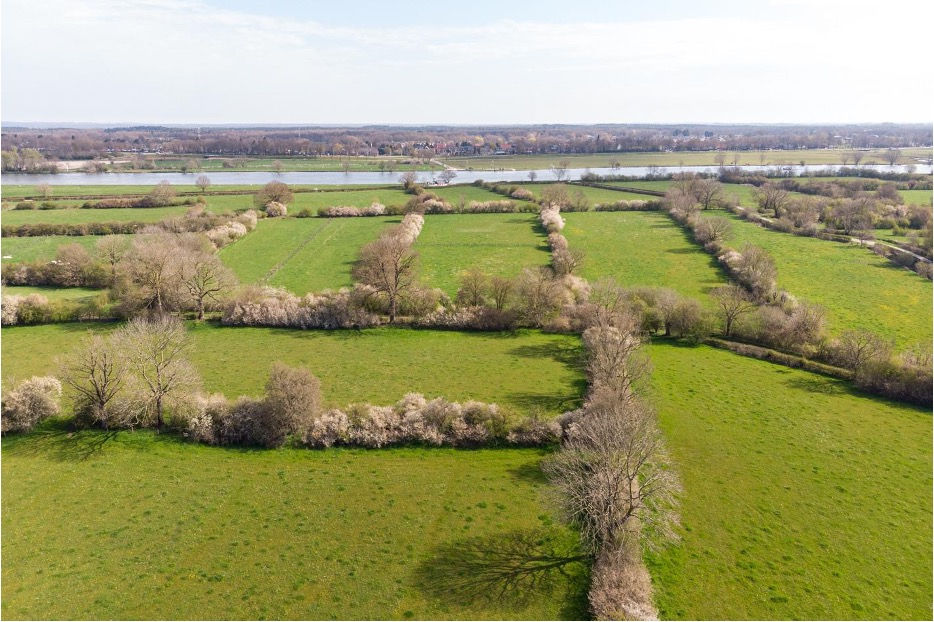
Still, self-management can take on remarkable forms: for example, the Maximapark and the Singel in Utrecht are managed by active resident foundations (figure 2). This is done in cooperation with and supported by the municipality, but when it comes to the management of public space, it is primarily the residents who call the shots. This is an advanced form of participation, which could be called the “Right to Challenge.” The core idea is that a group of (organised) residents can take over municipal tasks if they believe it can be done differently, better, smarter, and/or cheaper. This approach originates from England, and the idea is that an organised resident group can compete in a tendering process alongside commercial parties. If they win, they take over the outsourced task.
In itself, this is a beautiful principle: if you think something can be done better, feel free to do it yourself. This shortens the process I described at the beginning of the column: instead of shaping public space through politics, residents can take over tasks directly from the government. However, there is a downside: this way of participating only works for people who have the time, resources, and knowledge to organise effectively. The Singel and the Maximapark are places surrounded by affluent residents who know how to navigate the municipal system. As a result, they can exert more influence than other residents. This means that in the debate about public space, their voice carries more weight.
Residents with more wealth can more easily claim part of the public space than residents who do not have this luxury. Moreover, the government as a system is so complex that mainly highly educated people understand how it works. So, one may ask whether this is a “right to challenge” or a “privilege to challenge.” On the other hand, if more affluent residents take over tasks from the government, the government has more resources to deploy in places where they are more needed. This does require a certain consistency from resident foundations that maintain public space, and a government that dares to let go and invest unequally.
This tension creates a moral dilemma. If more is left to residents, public space becomes dependent on their goodwill. If the government continues to do everything itself, their influence remains limited. Are we in favor of equal rights, or do we allow privilege in order to invest in areas that need it more?

Figure 2: Park organization Máximapark, summer 2019. (Source: maximapark.nl)


Comments