


A Dictator’s Garden: Land Transformations under Europe’s Longest-Lasting Dictatorship
Article by Daniel Arrais do Livramento
Whenever people think about dictatorships in Europe, what usually comes to mind is Hitler’s Germany, Stalin’s Soviet Union, Mussolini’s Italy, and Franco’s Spain. But have you ever heard of Portugal’s dictatorship? Although not widely known among non-Portuguese speakers, it was the longest-lasting dictatorship in Europe, lasting nearly 50 years (1926-1974). The aftereffects of this regime persist to this day, not only in Portugal’s culture, but also in the land itself.
After eight centuries of monarchy, ending with the public assassination of the royal family, and a first republic that saw 45 governments in about 15 years, many of which were marked by violent transitions, the Portuguese people were tired of the instability. For this reason, in 1926, General Óscar Carmona carried out a coup d’état that effectively ended this turmoil and established a dictatorial regime.
Carmona invited António de Oliveira Salazar, then a professor, to become Minister of Finance. Salazar is a name that would come to define the dictatorship in Portugal. He achieved great success in balancing the country’s finances. However, after his promotion to Prime Minister, he went on to reshape Portugal’s landscape and its people with a lasting impact.
Through my research for this article, I identified three key aspects of how Salazar’s regime is connected to landscape and land-use transformation: changes to the land, regulation of garden design, and the foundation of landscape architecture education in Portugal.
Even though Salazar’s government is generally considered authoritarian in nature rather than totalitarian, as was the case in other countries, his government drew inspiration from certain aspects of Mussolini’s regime, particularly regarding labor and the idea that all citizens had to contribute to the nation through hard work. This concept leads to the first aspect: how the Portuguese landscape was physically and symbolically transformed during the dictatorship.
Changes to the Land
The Estado Novo (Portugal’s authoritarian political regime) sought to develop suburban areas. From an urban planning perspective, several social neighborhoods were built to replace previously abandoned or degraded areas. Bairro da Encarnação (1940–1946; figure 1) is one such example, inspired by the garden city movement, combining family homes with small yards and tree-lined streets, promoting an image of order and discipline, something deliberately projected.

Figure 1: Plan of Bairro da Encarnação, Lisbon. Source: Paulino Montez, 1940-1946. Retrieved from Camara, 2021.
Despite the relevance of urban design during this period, it was not in the urban world that the Estado Novo built its most significant identity, but rather in the rural world. According to the regime, Portugal should present itself to both urban citizens and outsiders/tourists as an essentially agricultural and conservative country, with values that opposed cosmopolitan and industrial ones. Because of this, rural life was exalted and seen as the guardian of secular traditions. The rural landscape itself, with cultivated fields, vineyards, olive groves, and montados (unique integrated crop-livestock-forestry system in Iberia), became one of the country’s greatest national symbols.
Among cultivated fields, cereal production stands out. The Campanha do Trigo (1929–1949; figure 2), inspired by Mussolini’s policies, aimed to make the country self-sufficient, reducing imports and prioritizing national production and consumption. This campaign was widely adopted by the Portuguese, as the state provided subsidies and cheap credit to rural landowners.

Figure 2: Campanha do Trigo propaganda. Source: unknown author, 1929-1949. Retrieved from https://restosdecoleccao.blogspot.com/2023/10/campanha-do-trigo.html
Initially, the increase in wheat production seemed rather positive, but it later led to consequences in the landscape. National prices, compared to international ones, and the maintenance of agrarian infrastructures revealed low economic sustainability. Furthermore, the construction of large dams, the draining of wetlands, extreme agricultural expansion, and deforestation increased soil erosion and destroyed several ecosystems that have yet to recover. This, together with the Portuguese Colonial War (1961-1974) shifted the public’s opinion about the regime and how sustainable this policy could be.
In many ways, rurality was a myth (figure 3). Rural areas were inhabited by a very poor population and characterized by a heavily altered landscape with few benefits. As a result, emigration increased greatly. Between 1946 and 1973, around two million Portuguese left the country, often clandestinely, heading to France, Germany, Luxembourg, and other destinations.
It is also worth noting that during this period, large areas of native forest began to be destroyed in favor of eucalyptus plantations for paper production. Due to emigration and the migration of rural populations to coastal urban areas, that is, due to the progressive abandonment of the countryside, these eucalyptus plantations were left unmanaged, spreading uncontrollably across the land. Their consequences are still evident today, particularly in the form of large wildfires that devastate the landscape and the lives of those that live in rural areas.

Figure 3: Photography to promote the myth of rurality. Source: Mário Novais, 1940. Retrieved from https://www.flickr.com/photos/biblarte/29112379062/in/album-72157606234802424
As mentioned earlier, the design of neighborhoods built during this period aimed to transmit an image of order and discipline. Architecture and landscape architecture, influenced by political power, can be used as tools to reinforce a country’s public image or identity. Public buildings, such as schools, courts, and town halls, as well as public spaces like avenues, squares, and gardens, were often designed ideologically, intended to convey the necessity of order, discipline, and authority. This brings us to the second aspect: the strict control of garden design under the Portuguese dictatorship.
Regulation of Garden Design
During this period, the relationship between space and power was often expressed through institutional or governmental buildings framed by gardens characterized by centrality, unity, symmetrical axes, monumental sculptural elements, and national or colonial symbols. These landscape elements aimed to instill national pride and reinforce the narrative the regime sought to convey: an historic, great and valiant nation.
The Exposição do Mundo Português (1940; figure 4) is perhaps the best example of a space being used to convey such a narrative. The exhibition mobilized artists, architects, engineers and sculptors. The Belém area (just west of Lisbon) underwent great transformation, as the regime sought to highlight historical monuments such as the Hieronymites Monastery and the Belém Tower. Additionally, new modern monuments were erected, such as the Monument of the Discoveries. All these monuments were articulated with gardens that blended modernism with traditional architecture, always infused with symbols of ideology and national pride.
Among the gardens designed for the exhibition, the most characteristic is perhaps the Jardim da Praça do Império (figure 5), which remains controversial today for still displaying symbols that, for many, represent a dark colonial past. Its design leaves little doubt that political power had the authority to shape the landscape, and that architectural art was used as a means of expressing Estado Novo’s great control over both land and people. In many cases, the landscape itself functioned as a space of propaganda for the regime, even if in subtle or unconscious ways.

Figure 4: Exposição do Mundo Português, Lisbon. Source: Mário Novais, 1940. Retrieved March 2026 from https://www.flickr.com/photos/biblarte/2679907318/in/album-72157606234802424/

Figure 5: Praça do Império, Lisbon. Source: Horácio Novais, 1940. Retrieved March 2026 from https://www.flickr.com/photos/biblarte/15935138181/
While gardens offer a visible example of the regime’s influence, its impact extended beyond design into education. This brings us to the third and final aspect: the establishment of landscape architecture education in the era of the Portuguese dictatorship.
Foundation of Landscape Architecture education in Portugal
Interestingly, landscape architecture education emerged in Portugal during both the Portuguese dictatorship and the Nazi period in Germany. Francisco Caldeira Cabral, the founder of landscape architecture education in Portugal, studied between 1936 and 1939 at the Friedrich-Wilhelms-Universität in Berlin, in a context shaped by National Socialism. The German influence, particularly that of Heinrich Wiepking-Jürgensmann of the Nazi Party, was decisive in his training. However, it is important to emphasize that Caldeira Cabral managed to separate scientific and ecological principles from ideological influences. After completing his studies, he returned to Lisbon and established the landscape architecture program at the Instituto Superior de Agronomia. This means that the academic field in Portugal was founded by someone trained in Nazi Germany and developed under an authoritarian regime in Portugal.
The Estádio Nacional do Jamor project (figure 6), initiated in 1937, marked the beginning of Caldeira Cabral’s professional practice. The stadium was initially planned to be built on an alluvial plain, which Caldeira Cabral opposed, as he had learned that valleys should not be impermeabilized. Together with his German professors, he proposed building the stadium on a hillside in a form resembling an embrace. This choice created political tensions, as his proposal moved away from authoritarian monumentality in favor of something more harmonious with nature. After these tensions, Cabral did not work for the government again until the Carnation Revolution in 1974.
Nevertheless, despite not working for the government during those years, he provided an important service to the nation by training the first generation of landscape architects. Among their projects, the Gulbenkian Garden (figure 7) stands out, designed by Gonçalo Ribeiro Telles and António Viana Barreto in 1969, still during the dictatorship. More recently, this garden was expanded by Vladimir Djurovic in collaboration with Kengo Kuma.
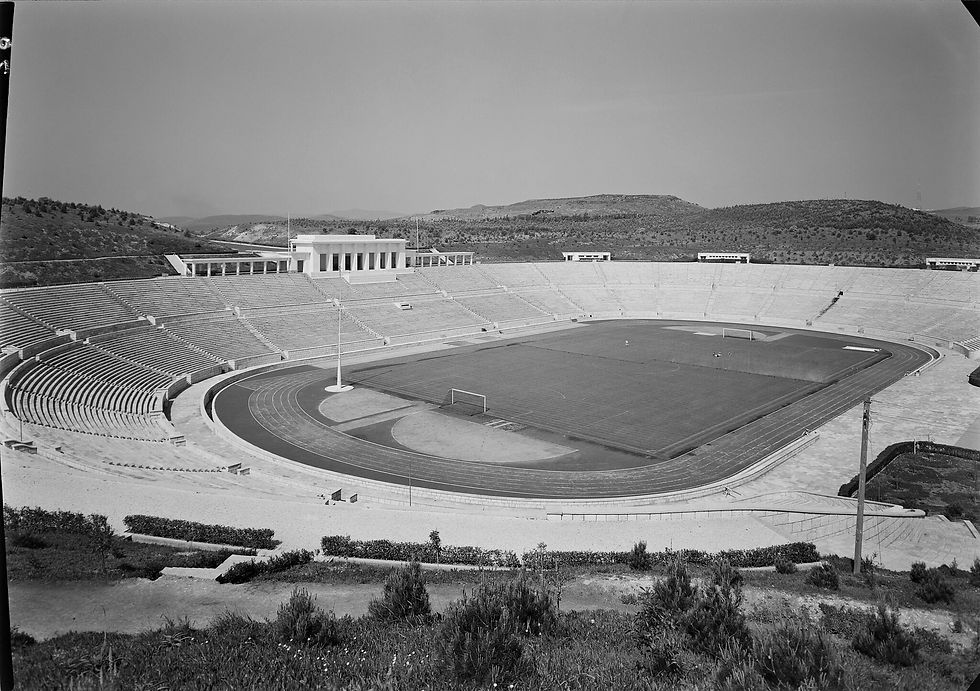
Figure 6: Estádio Nacional do Jamor, Lisbon. Source: Horácio Novais, 1944. Retrieved March 2026 from https://www.flickr.com/photos/biblarte/4284796360/in/photostream/

Figure 7: Plan of Jardim Gulbenkian, Lisbon. Source: Viana Barreto and Ribeiro Telles, 1963-1969. Retrieved March 2026 from https://gulbenkian.pt/jardim/documents/plano-geral-definitivo-i-1969/
Closing Remarks
Today’s landscape is clearly very different from what one would have encountered between the 1920s and 1970s. However, there is no doubt that some marks of the dictatorial regime remain present in Portugal. This is evident not only in sociocultural aspects but also in the physical appearance of the landscape. Many infrastructures built during Salazar’s period still dominate the Portuguese landscape, and even that of some former colonies. This demonstrates that the past is difficult to erase and that landscapes and places act as repositories of memory and identity.
When I lived in the Netherlands, someone told me that to understand Dutch history, one must understand the history of agriculture. I believe the same can be said for any country. In Portugal, the myth of rurality persists. The countryside continues to be one of the main images used to promote Portugal to tourists. Rapid industrialization is still somewhat viewed as an enemy, and in some deep inland regions, the present landscape is not very different from that of the past. In this respect, I think Mediterranean agricultural countries and industrialized Germanic countries differ significantly. The great tension between tradition and modernity remains evident in the Portuguese landscape.
In the past, rural exodus was able to improve the living conditions of many, and in many ways, more effectively than corporatism had promised. One could say that a whole generation sacrificed itself to enable the country’s transformation. However, this is not merely a phenomenon of the past. Today, emigration and the gradual abandonment of the countryside continue. Evidence of their consequences appears in the landscape every year. Even though there are many specialists and there have been many studies to change such consequences, most of them are theoretical or take too long to implement due to the government’s bureaucracy. That means that few practical solutions were implemented at the level of territorial management. Much is yet to be done.
Even though landscape architecture in Portugal emerged from foreign authoritarian influences, it sought to adapt to the local geographic context and to be reinterpreted. Today, landscape architecture education in Portugal is very different from what it was during the dictatorship, as it has had to evolve. It is now regarded as a tool for organizing territory and designing both public and private spaces, not as a tool used for monumentality. Current generations have been adapting to contemporary conditions and working in different sectors than in the past, facing new challenges that earlier generations did not encounter, although many present challenges resemble those of the past and are, in some ways, consequences of it.
References
Andresen, T. (2001). Francisco Caldeira Cabral. Landscape Design Trust Monographs.
Andresen, T. (2005). Do Estádio Nacional ao Jardim Gulbenkian: Francisco Caldeira Cabral e a Primeira Geração de Arquitectos Paisagistas. Fundação Calouste Gulbenkian.
Antunes, A. (2019). A influência alemã na génese da arquitetura paisagista em Portugal. [Doctoral Thesis, Faculdade de Ciências da Universidade do Porto]. Repositório Aberto da Universidade do Porto. https://hdl.handle.net/10216/121946
Antunes, A., Marques, T., & Andresen, T. (2022). The genesis of training in landscape architecture in Portugal. Projets de paysage. https://doi.org/10.4000/paysage.27624
Associação Portuguesa de Arquitectos Paisagistas. (2010). Caracterização da Arquitectura Paisagista em Portugal. Centro de Estudos de Arquitectura Paisagista Prof. Caldeira Cabral.
Barreto, F. (2011). Contributo para a história da arquitectura paisagista em Portugal: Arquitecto paisagista António Facco Vianna Barreto. [Master Thesis, Instituto Superior de Agronomia]. Repositório Científico de Acesso Aberto da ULisboa. http://hdl.handle.net/10400.5/4146
Belo, D., & Domingues, A. (2022). Paisagem Portuguesa. Fundação Francisco Manuel dos Santos.
Caldeira, F. (2003). Fundamentos da Arquitectura Paisagista. Instituto de Conservação da Natureza.
Camara, T. (2021). Espaço público de Lisboa: Plano, projeto e obra da primeira geração de arquitetos paisagistas (1950‑1970). Câmara Municipal de Lisboa.
Domingues, A. (2012). Vida no Campo. Dafne Editora.
Meneses, F. (2011). Salazar, Biografia Definitiva. Publicações Dom Quixote.
Nora, P. (1997). Les Lieux de Mémoire. Éditions Gallimard.
Queiroz, C. (2016). Paisagem Portuguesa. Feitoria dos Livros.
Ribeiro, O. (1998). Portugal, o Mediterrâneo e o Atlântico. Livraria Sá da Costa Editora.
Sampaio, J. (2012). Mitificação e Paisagem Simbólica: o Caso do Estado Novo. Cadernos Curso de Doutoramento em Geografia da Faculdade de Letras da Universidade do Porto.
Santos, H. (2017). Portugal: Paisagem Rural. Fundação Francisco Manuel dos Santos.
Santos, H., & Belo, D. (2022). Das Pedras, Pão. Museu da Paisagem.
Santos, P. (2021). A implantação da imagem do Estado Novo através da arquitetura: A zona oriental do distrito do Porto. [Master Thesis, Universidade Fernando Pessoa]. Repositório Institucional da Fernando Pessoa. http://hdl.handle.net/10284/10416
Silva, M., Castel-Branco, C., Nunes, J., Ribeiro, L., & Andresen, T. (2025). Portuguese Landscape Architecture Education, Heritage and Research. Routledge.
Távora, F. (2015). Da Organização do Espaço. Faculdade de Arquitectura da Universidade do Porto.


Opmerkingen